
Casting in the Golf Swing: Causes, Drills, and a 4-Week Fix
Casting throws away your downswing lag too early, which adds loft and weak contact. The truth about holding lag, the drills, and a 4-week fix that sticks.
Quick answer
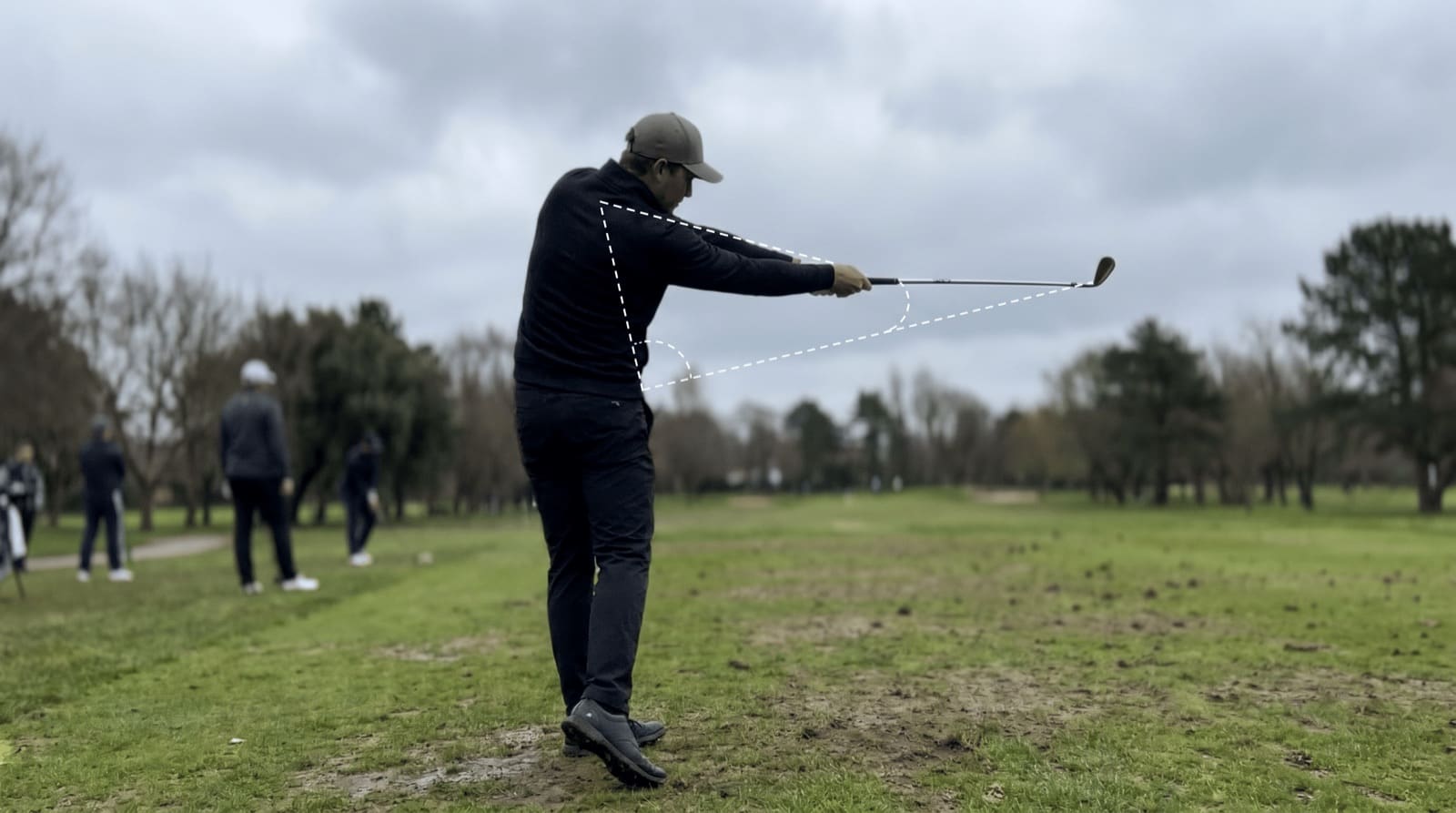
Casting is releasing your wrist hinge too early in the downswing, so the clubhead passes the hands before impact. That adds loft, kills forward shaft lean, and shoves the low point behind the ball, feeding high weak shots and fat or thin contact. The counterintuitive part: actively holding lag does little for speed, because lag is a byproduct of sequence. Fix it in order, square the face, start down with the lower body, then let the release happen late.
Casting vs. its lookalikes — find the fault you actually have
Casting gets blamed for misses that belong to three other faults. They feel similar at impact and look similar from face-on, but they start in different places and need different fixes. Sort yourself first.
| Fault | When it happens | What you see down the line | Primary driver | First fix |
|---|---|---|---|---|
| Casting (early release) | Early-to-mid downswing | Shaft lines up with the lead arm by arm-parallel | Open face or arms-first downswing | Square the face, then start down with the body |
| Flipping / scooping | At impact | Clubhead passes the hands, lead wrist cups, shaft leans back | Late save of an open face, stalled body | Forward-shaft-lean and impact drills |
| Early extension | Transition through impact | Pelvis moves toward the ball, spine stands up | Hip-depth and mobility limits | Posture and lower-body screen |
| Over-the-top | Transition | Club drops outside the plane, cuts across the ball | Steep, out-to-in path from the top | Path and shallowing work |
If the shaft is already in line with your lead arm halfway down, this is your post. If your hips are charging the ball, read the early extension fix first. If the club drops outside the line in transition, start with the over-the-top reroute. The faults tangle together, so you may need two of these, but casting is the one to chase when your ball flight balloons and your contact runs fat-then-thin.
Why casting costs you distance and clean contact
Casting hurts by ruining impact geometry. When the clubhead overtakes the handle early, the shaft stands up or even leans back at impact instead of leaning forward. That adds loft. Coaches describe a bad cast as turning a 7-iron into something closer to a 9-iron by the time it reaches the ball, because the clubhead works underneath the handle and the handle stops leading.
TrackMan’s launch-monitor data explains the chain. Dynamic loft, the loft on the face at impact, sets launch and spin, and for a given clubhead speed a lower dynamic loft with the right angle of attack produces a higher smash factor, the ratio of ball speed to clubhead speed. Cast the club and you raise dynamic loft, lose forward shaft lean, and bleed smash factor, so the ball launches high, spins up, and lands short of where the same swing speed should carry it.
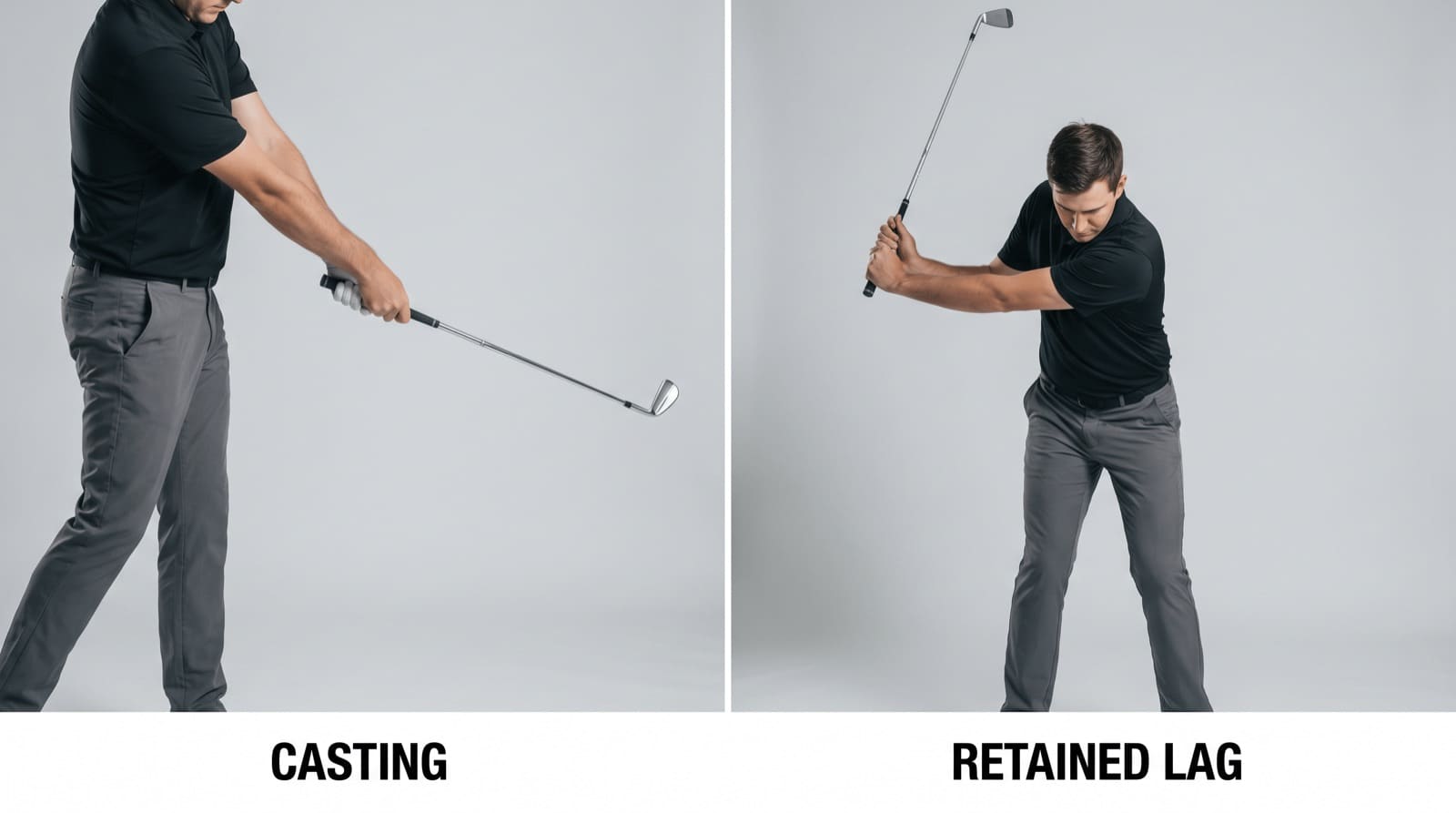
The contact side is just as costly. Casting extends the distance between the clubhead and your body, which drags the bottom of the swing arc backward, behind the ball. From a low point behind the ball, the club either thumps the turf first for a fat shot, or you sense the ground coming and pull up, catching the ball thin or topping it. One early release, several different ugly results.
This matters more than a swing-geek detail because of where amateurs actually lose strokes. Mark Broadie’s strokes-gained work, summarized by instructor Andrew Rice, found that roughly two-thirds of the strokes tour pros gain on the field come from shots outside 100 yards, where distance and strike quality decide the result. Arccos shot-tracking data points the same way: distance is tied tightly to lower scores. Casting attacks exactly those long-game shots, so cleaning it up is high-leverage practice that shows up on the scorecard.
What the research actually says about holding lag
Here is where most casting advice goes wrong. The standard cue is to hold the lag, keep the angle, delay the release as long as you can. The biomechanics do not support chasing lag as a speed source.
Dr. Sasho MacKenzie’s swing modeling, discussed through the Newton Golf Institute, found that adding wrist torque to hold the angle has only a small influence on clubhead speed compared with the whole-body dynamics of the swing. In conversation with coach Chris Como, MacKenzie calls swing speed “the number one thing” for performance, but he means functional speed that comes from sequence and strike, which casting wrecks.
Lag is a byproduct of the kinetic sequence. When the hips lead, then the torso, then the arms, the heavy clubhead naturally trails behind and the wrist angle holds on its own, releasing late as the body slows and hands pass the trail thigh. Athletic Motion Golf describes the feel as an elephant’s trunk: the lower body unwinds and the club lags and then whips through, with almost no conscious throw from the top. Try to hold the angle by force and you add tension to the forearms, and tense wrists fire the club early, the exact move you are trying to remove.
So every good swing releases the wrists fully. Motion-capture data from GEARS, reported through the Newton Golf Institute, shows a skilled lead wrist moving to roughly 18 degrees of ulnar deviation by impact, about a 71-degree change across the downswing. The release is large; the difference is timing and direction.
A good player releases late and behind them as the body clears; a caster releases early and out toward the ball. Tour coach Monte Scheinblum puts it bluntly: over-the-top slicers are all casting “toward four and five o’clock,” throwing the club out at the ball from the top instead of letting it fall behind them.
The practical takeaway changes how you should practice. Cues like “hold the angle” point your attention at your own wrists, and that internal focus tightens the swing. Wulf, Lauterbach and Toole (1999) found that an external focus, on the target or the club rather than the body, produced better golf-shot accuracy and retention, a result a 2023 review of attentional focus backs up across motor skills. The drills below use external targets, a splash of water and the body turn, so the release organizes itself.
The fix order: face, then sequence, then a late release
Casting is a symptom, so chase its causes in order. Squaring the face first removes the biggest reason golfers cast: the panic save of an open clubface. With a face that returns square on its own, the hands no longer need to flip to rescue the shot.
Then fix the start of the downswing. An arms-first move from the top throws the club out and dumps the lag immediately, so retraining the lower body to lead is the structural fix. Only after the face and the sequence are handled do you train the release itself, late and passive, with feels rather than positions. Work the order top to bottom, because jumping straight to “hold your lag” skips the two causes that actually create the cast.
Drills that actually stop casting
Run these in sequence, and judge them against video at the shaft-parallel checkpoint rather than feel. Casting feels fast and powerful from inside the swing, which is part of why it persists, so the camera is the honest scorekeeper.
1. The shaft-parallel video check (diagnose first)
Film down the line and scrub to the frame where your lead arm is parallel to the ground in the downswing. A retained angle shows the shaft pointing well above the ball, with the lead arm and shaft forming a clear angle. A cast shows the shaft already lined up with the lead arm, clubhead drifting past the hands. This is your baseline and your weekly retest, no launch monitor required, so mark the frame and compare the same checkpoint each time.
2. Square the face so you stop casting to save it
An open clubface is the most common reason golfers throw the club, so a weak grip is often the real root of a cast. Rotate your lead hand on top of the grip until you can see two knuckles and the V between thumb and forefinger points at your trail shoulder. Then hit waist-high shots with grip pressure around 4 out of 10, feeling the face stay square without a hand-flip to save it. The full grip walkthrough lives in how to grip a golf club; a square face removes the panic that triggers the early release.
3. The pump drill (start down with the lower body)
From the top, pump your hands down to waist height two or three times while your lead hip turns back and clears, then swing through and hit the shot. The feel is the body leading and the club trailing, the opposite of throwing from the top. Keep a headcover or glove tucked under your trail armpit so the arm stays connected instead of casting out.
Aim for 8 of 10 reps where the headcover stays put through impact. This is where the casting fix overlaps with tempo and sequence and with the weight shift that powers the downswing.
4. The pool drill (handle leads, wrist angle holds)
Picture standing in a pool with water to your waist. Make a small shift toward the target, lower the arms, and try to splash the butt of the club into the water just ahead of the ball, before the clubhead gets there. Splash with the clubhead first and you have cast; splash with the grip end first and the handle is leading with the angle intact. The image keeps your attention external, on the splash, which is why it tends to retrain the release faster than thinking about your wrists.
5. The swoosh-past-the-ball drill (late, passive release)
Turn a club upside down and grip it near the head, or swing a light alignment stick. Make full swings and listen for the loudest swoosh. A caster’s swoosh peaks early, out by the trail leg, because the speed dumps from the top.
Train the loudest swoosh to arrive at and just past the ball by letting the body clear before the arms fire. This external cue, the sound and its location, trains the release to come late without any “hold the angle” tension. Five sets of five swooshes is a tidy warm-up before you hit balls.
The 4-week protocol that makes it stick
Drills fix nothing if they never meet a varied, full-speed shot. The plan below mirrors the howTo on this page, and it is the same face-first order PracticeCaddie’s AI plans use when a golfer flags a high-weak ball flight or a fat-and-thin pattern in onboarding.
- Week 0 — measure and diagnose. Film down the line, check the shaft against your lead arm at arm-parallel, and read your divots and ball flight. Confirm casting before you chase it. Baseline only, no changes.
- Week 1 — square the face. Strengthen a weak grip to two knuckles and a trail-shoulder V, then hit waist-high shots with soft grip pressure so the face returns square without a save.
- Week 2 — start down with the lower body. Run the pump drill with a headcover under the trail arm. The body leads, the club trails, 8 of 10 reps with the headcover staying put.
- Week 3 — train a late release and randomize. Add the pool drill and the swoosh drill, then build an 18-shot list rotating club and target so no two shots match. This random phase is what transfers the fix, and block vs random practice explains why.
- Week 4 — pressure-test and play. Three cold shots to a 30-yard window to end each session, pass or fail. Re-film at the same checkpoint, then play nine holes and log every ballooned or fat shot.
- Maintenance — re-film every two weeks. The cast returns under the urge to swing harder. Re-check the shaft-parallel frame; two regressed sessions in a row triggers a single reset session of face work plus the pump drill.
When to stop self-coaching and book a lesson
Self-coaching handles most casting. Two patterns are worth a launch-monitor lesson with a coach instead of another month alone.
- A cast tangled with a path or posture fault. When casting rides on top of an over-the-top move or early extension, fixing the wrists alone never holds, because the body is still forcing the throw. A coach with a launch monitor sorts which layer is driving the miss in about an hour.
- A two-way miss that survives the protocol. If you balloon one shot and snap-hook the next, with the cast returning the moment your focus drifts, the face and release are still uncontrolled at speed. That is hard to see from your own phone, and 60 minutes of feedback beats four more weeks of guessing.
A single launch-monitor lesson costs more than a normal range session, and it’s worth it when the missing piece is the diagnosis rather than the drill.
Common mistakes
- Trying to hold lag harder. Squeezing the angle adds forearm tension, and tense wrists throw the club early. Let the body sequence create the lag instead, per MacKenzie’s modeling.
- Ignoring the open face. Most casters throw the club to square a face that hung open. Drill the wrists without fixing the face and the cast comes straight back.
- Internal cues at full speed. “Keep the angle” and “lead with the handle” fall apart under a real swing. Switch to external cues, the splash and the swoosh, once the feel is built.
- Block practice for four weeks. Fifty 7-irons at one target hides the cast inside a session and lets it return on the first tee. Week 3 has to be random.
- Chasing the wrists when the cause is the pelvis. If early extension is thrusting the body toward the ball, the arms throw to make room. Fix the lower body and the cast often clears on its own.
Key takeaways
- Casting is the early release of the lead-forearm-to-shaft angle, so the clubhead passes the hands before impact, adding loft and moving the low point behind the ball.
- It wrecks impact geometry. TrackMan ties the added dynamic loft and lost shaft lean to lower smash factor, higher launch, and shorter carry.
- Holding lag is overrated as a speed source. MacKenzie’s modeling shows wrist torque adds little speed; lag is a byproduct of the kinetic sequence.
- Fix the face first. An open clubface is the most common trigger, because golfers cast to square it. A stronger grip removes the panic save.
- Then fix the sequence. The pump drill teaches the lower body to lead so the club trails instead of throwing from the top.
- Cue it externally. Wulf et al. (1999) found external focus beats internal focus for golf accuracy and retention, which is why the pool and swoosh drills transfer.
- Transfer beats reps. Random, mixed-club practice from Week 3 is what carries the late release to the course, so build it into your three-to-four-week block.
Frequently asked questions
What is casting in the golf swing?
Casting is releasing the angle between your lead forearm and the club shaft too early in the downswing, so the clubhead passes the hands before impact. Instead of holding an L shape into the downswing, a caster’s shaft lines up with the lead arm by the time the arm is parallel to the ground. The early release adds loft and moves the low point behind the ball, which is why casting produces high, weak shots and fat or thin contact.
What causes casting in golf?
Two roots, usually together. An open clubface is the first: when the face hangs open in the downswing, the hands throw the club to square it, which releases the lag. The second is an arms-first downswing where you hit from the top instead of letting the lower body lead, and weak grips, tense wrists, and a backswing with no wrist set feed both. Square the face and fix the start of the downswing before drilling the wrists themselves.
Does casting cause fat and thin shots?
Yes. When you cast, the clubhead overtakes the handle and the bottom of your swing arc moves backward, behind the ball. From there the club either bottoms out in the turf before the ball for a fat shot, or you instinctively pull up to avoid the ground and catch the ball thin or top it. The same early release also adds loft and removes forward shaft lean, so the strike loses compression and the ball climbs high and lands short.
What is the best drill to stop casting?
The pool drill gives the fastest feel. Imagine standing in water to your waist and splash the butt of the club into the water ahead of the ball, before the clubhead, which forces the handle to lead and keeps the wrist angle intact through impact. Pair it with the pump drill so the lower body starts the downswing while the club trails. Both use an external target, the splash and the body turn, which motor-learning research shows transfers better than thinking about your wrists.
Does holding lag actually add distance?
Less than most golfers think. Biomechanist Dr. Sasho MacKenzie’s swing modeling found that actively adding wrist torque to hold the angle has only a small effect on clubhead speed, which comes mostly from the kinetic sequence of hips, torso, arms, and club firing in order. Lag is a byproduct of that sequence, and the wrists release on their own once the body has done its work. Trying to hold the angle by force adds forearm tension, and tense wrists tend to throw the club early instead.
How is casting different from early extension?
They are separate faults that often appear together. Casting is a wrist problem, the lead-forearm-to-shaft angle releasing too early in the downswing, while early extension is a lower-body problem, the pelvis thrusting toward the ball as the spine stands up out of posture. You can cast while holding your posture, or early extend while keeping decent wrist angles. A down-the-line video tells them apart: the shaft lining up with the lead arm early is casting, the hips moving toward the ball is early extension.
How long does it take to fix casting?
Plan on three to four weeks of structured work, two to three sessions a week. Casting is usually a timing and face-control habit rather than a deep physical limitation, so it often moves faster than a posture fault. Block practice on the range can hide the fix inside a session, so the random, mixed-club practice from week three onward is what decides whether the new release survives on the course. Re-film every two weeks to keep it from creeping back.
Related reading
- How to Grip a Golf Club — the setup cornerstone; a square-returning face removes the open-face panic that triggers most casts.
- Early Extension in Golf: Causes, Drills, and a 4-Week Fix — the lower-body fault that often forces the arms to throw; run its screen if your hips charge the ball.
- How to Fix an Over-the-Top Golf Swing — the out-to-in path that casts the club toward the ball from the top; pair the path fix with this one.
- Weight Shift in the Golf Swing — the trail-to-lead pressure move that lets the lower body lead so the club can lag instead of casting.
- How to Stop Topping the Golf Ball — the rearward-low-point miss casting feeds; the two protocols share the body-leads fix.
- Golf Tempo Drills — the 3:1 sequence work that grooves the body-first downswing the pump drill teaches.
- Block vs Random Practice in Golf — why the Week 3 random phase is what carries the new release onto the course.
- Golf practice drills, organized by skill area — the companion drill library, with setup steps and success criteria.
- 30-minute golf practice plan — where the pump, pool, and swoosh drills fit into a tight session.