
Strokes Gained: Approach Explained (And How to Fix Yours)
Approach shots are 40% of the gap between average and elite Tour pros. What Strokes Gained: Approach measures, the proximity data, and how to fix yours.
Quick answer
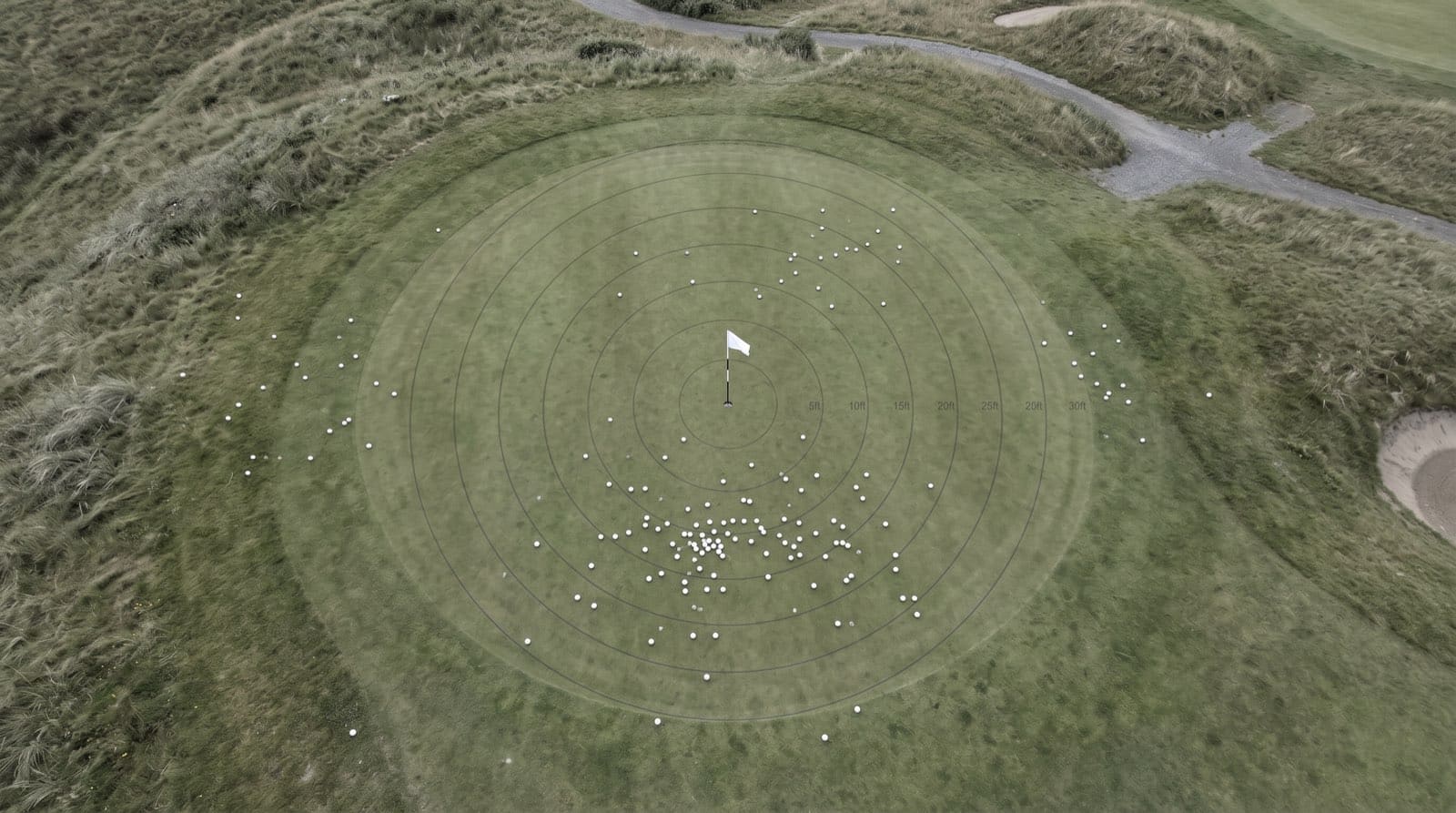
Strokes Gained: Approach scores every shot from outside 30 yards that is not a tee shot on a par 4 or par 5. It is the biggest scoring lever in golf — approach play is about 40% of the gap between average and elite Tour pros, per Mark Broadie’s ShotLink data. Amateurs lose more strokes here than anywhere else, and most miss short of the target. Sharpen your approach distances and scores drop faster than the same hours spent putting.
PGA Tour approach performance, from the fairway
| Approach distance | What even a Tour pro does |
|---|---|
| 50 yards | inside 12 feet only half the time |
| 100 yards | 18 feet 5 inches on average; 4% finish inside 3 feet |
| 115 yards | hits the green about 80% of the time |
| 160 yards | inside 3 feet just 1% of the time |
| 205 yards | hits the green half the time |
| 250 yards | hits the green only 20% of the time |
Tour proximity and make-rate data via Golf.com’s summary of Lou Stagner’s ShotLink chart. If the best players alive miss the green half the time from 205 yards, your 150-yard expectations need calibrating.
What Strokes Gained: Approach actually measures
The PGA Tour splits every shot into four Strokes Gained buckets. Approach is the biggest of them by both shot count and scoring weight.
The category covers every shot that starts more than 30 yards from the green and is not a tee shot on a par 4 or par 5. That sweeps in your irons and hybrids into greens, your second shot on par 5s, and a detail most golfers miss: every par-3 tee shot. Shots inside 30 yards belong to Around the Green, and anything on the putting surface is Putting. The full four-category breakdown lives in our Strokes Gained primer; this post drills into the one category that moves your score the most.
The math is the same for every shot. Take the expected strokes to hole out from where your ball started, subtract the expected strokes from where it finished, then subtract 1 for the swing you took. A 150-yard approach from the fairway carries a Tour baseline of about 2.98 strokes to hole out (PGA Tour methodology; Broadie’s research). Hit it to 10 feet, where the baseline is about 1.5, and you gained roughly half a stroke on a single swing.
Why approach is the biggest scoring lever
Mark Broadie, the Columbia professor who built Strokes Gained, laid out the decomposition in his book Every Shot Counts. Approach shots account for about 40% of the scoring advantage the best Tour pros hold over average Tour pros, and the long game — every shot starting beyond 100 yards — explains roughly two-thirds of scoring variance among professionals (Golf.com). Putting, the skill most amateurs obsess over, contributes far less.
The pattern repeats for amateurs, louder. Broadie’s data shows approach shots make up 4 of the 10 strokes that separate a typical 90-shooter from an 80-shooter, more than driving, short game, or putting contribute on their own (Golf.com). On Tour the same truth shows up on the leaderboard: Collin Morikawa led 2024 Strokes Gained: Approach, and the most dominant ball-strikers of the era win by stacking approach strokes.
Putting feels decisive because the ball drops in front of you. The accounting points 150 yards back.
What a good approach shot actually looks like
Most amateurs carry a fantasy of approach play that no human achieves. The data from Golf.com’s breakdown of Tour ShotLink numbers is a useful cold shower.
From 100 yards, a wedge for most players, the average Tour pro leaves it 18 feet, 5 inches from the hole. Only 25% of those wedges finish inside 9 feet. Just 4% finish inside 3 feet. From 50 yards, the best players in the world get it inside 12 feet only half the time, and they average barely 3 feet closer than they do from a full 100.
Stretch the distance and the picture gets bleak fast. Tour pros hit the green about 80% of the time from 115 yards, half the time from 205 yards, and only 20% of the time from 250. From 160 yards a Tour player holes it close, inside 3 feet, on just 1 of every 100 attempts.
Sit with those numbers before your next round. If a Tour pro expects 18 feet from 100 yards, your goal from 150 is the middle of the green.
The danger zone: 150 to 200 yards
Broadie’s data flags one stretch as the toughest scoring zone on the course: roughly 150 to 200 yards. Far enough that even pros miss greens often, close enough that you face the shot several times a round. Small gains here cash out fast.
For weekend players the critical band sits a touch shorter, around 100 to 150 yards, simply because that is where most of their approach shots originate (Golf.com). The gap between you and a scratch player is widest exactly where you swing most often.
The 150-yard shot tells the whole story. From 150 in the fairway, a 90-shooter hits the green only 35% of the time, and half of those approaches finish more than 59 feet from the hole, two and a half times farther than a Tour pro from the same spot (Golf.com). Arccos data puts a scratch golfer’s average approach proximity near 41 feet and a 15-handicap’s near 68 feet, and Lou Stagner’s approach-proximity analysis breaks the gap down by handicap band. Every one of those extra feet is a longer putt, a likelier three-putt, and a stroke creeping onto the card.
Why amateurs leave it short
The most fixable leak in amateur golf is also the quietest: the ball comes up short. Broadie found the average 90-shooter’s approach pattern from 150 yards centers about 13 yards short of the hole (Golf.com). The misses cluster short far more than they spray sideways.
The cause is club selection built on a highlight reel. Most golfers club for the one 7-iron they flushed last month, then come up 10 to 15 yards short with the strike they actually make most days. Greens are also defended at the front with bunkers, false fronts, and run-up trouble, so the short miss is usually the worst miss available.
The repair costs nothing. Know the carry distance your average strike actually produces and take enough club to reach a middle pin. For most amateurs that means clubbing up one, sometimes two. A launch monitor helps, but a few range sessions logging where the ball really lands will get you most of the way.
How to improve your Strokes Gained: Approach
Strokes Gained: Approach surfaces the leak. Closing it is a practice problem, and a very solvable one.
- Measure your baseline. For three or four rounds, note how far from the hole your approaches finish from 100, 125, and 150 yards. A sensor system like Arccos or Shot Scope automates this; a notebook works too. You cannot improve a number you have never written down.
- Nail your carry distances. Hit each iron and wedge 10 times and record the average carry, not the longest. This single step erases most of the short bias, because you will discover your stock 7-iron carries several yards less than you thought.
- Practice the 100 to 150 yard zone. That is where your strokes live, so that is where range time goes. Vary the target every shot instead of raking ball after ball to the same flag. The block-versus-random research shows randomized practice transfers far better to the course, and our ball-striking drills and practice drill catalog are built around this zone.
- Build three repeatable wedge distances. Most amateurs have one wedge speed: full. Pick three carries inside 100 yards, say 50, 75, and full, and groove them until the gaps are reliable. Distance control inside 100 yards is where approach proximity tightens fastest.
- Aim at the fat of the green. Even Tour pros play to the center from the danger zone. Pick the target that keeps your average miss safe and let the occasional great shot be a bonus. The course-management tips translate this into hole-by-hole decisions.
- Re-test every 6 to 8 weeks. Pull the same proximity numbers from step 1 and check the trend. Approach gains show up as feet closer, then as fewer putts, then as lower scores, usually in that order.
PracticeCaddie’s AI plans take this further: feed in your assessment and the plan weights practice toward the exact distances where you are losing strokes. AI plan generation is a Pro feature with a 3-day free trial. Want to architect it yourself? The practice-plan-by-handicap guide lays out the allocation by skill level.
Common mistakes
- Grinding on putting while approach bleeds strokes. The green is the visible miss, so it gets the practice. Broadie’s math says the bigger lever sits 150 yards back.
- Clubbing for your best shot. The club should match the strike you make most days. Picking for your flush 7-iron feeds the 13-yards-short pattern.
- Aiming at every flag. Tucked pins are traps. The middle of the green is almost always the higher-percentage target from outside 120 yards.
- Raking balls to one target. Blocked range reps inflate your range ego and transfer poorly. Randomize the target and the distance.
- Judging approach by one round. A single round of approach data is noise. Track 10 or more before you trust the trend.
Key takeaways
- Approach is about 40% of the scoring gap between an average and an elite Tour pro, and 4 of the 10 strokes between a 90 and an 80-shooter (Broadie).
- From 100 yards, a Tour pro averages 18 feet 5 inches and holes it close just 4% of the time. Your expectations from 150 should be the middle of the green.
- The danger zone is 150 to 200 yards for pros; for amateurs the highest-value band is 100 to 150, because that is where most approaches start.
- The amateur miss is short, about 13 yards short from 150 yards. Knowing your real carry distances fixes most of it for free.
- A 90-shooter hits the 150-yard green just 35% of the time, and half of their 150-yard approaches finish more than 59 feet from the hole; a scratch player averages about 41 feet of proximity, a 15-handicap about 68.
- Improvement is a feet-closer game. Track proximity from 100 to 150 yards, practice that zone with varied targets, and re-test every 6 to 8 weeks.
- PracticeCaddie’s AI plans weight practice toward your measured leaks, a Pro feature with a 3-day trial.
Frequently asked questions
What is Strokes Gained: Approach in golf?
Strokes Gained: Approach measures how much every approach shot helps or hurts your score against a baseline drawn from thousands of similar shots. It covers shots starting more than 30 yards from the green that are not tee shots on par 4s or par 5s, including par-3 tee shots. The formula takes expected strokes from your starting spot, subtracts expected strokes from where the ball finished, then subtracts 1 for the swing. Mark Broadie created the framework, and the PGA Tour adopted Strokes Gained for putting in 2011 and the full four-category version in 2016.
What counts as an approach shot in strokes gained?
Any shot that starts more than 30 yards from the edge of the green and is not a tee shot on a par 4 or par 5. That includes iron and hybrid shots into greens, your second shot on most par 5s, and every par-3 tee shot. Shots inside 30 yards of the green count as Around the Green, and anything on the putting surface counts as Putting. The 30-yard line is the boundary the PGA Tour uses to separate approach play from the short game.
Why are approach shots more important than putting?
Because the data says so. Mark Broadie’s analysis of millions of shots found approach play accounts for roughly 40% of the scoring advantage elite pros hold over average pros, while the long game overall explains about two-thirds of scoring variance. For amateurs, approach shots make up 4 of the 10 strokes between a 90-shooter and an 80-shooter. Putting feels decisive because you watch the ball drop, yet the larger and more fixable scoring leak usually sits 100 to 200 yards out.
What is the danger zone in golf approach play?
The danger zone is the 150-to-200-yard range that Mark Broadie’s data identifies as the toughest scoring stretch on the course. From there, even Tour pros miss greens often, about half the time from 205 yards, yet players face several of these shots per round, so small improvements pay off quickly. For most amateurs the highest-value band sits a little shorter, around 100 to 150 yards, because that is where the bulk of their approach shots actually start.
How close do PGA Tour pros hit their approach shots?
Closer than amateurs, but not as close as most fans assume. From 100 yards, the average Tour pro finishes 18 feet 5 inches from the hole, with only 25% inside 9 feet and just 4% inside 3 feet. From 50 yards they get inside 12 feet only half the time. Green-hit rates fall steeply with distance: about 80% from 115 yards, 50% from 205, and 20% from 250. If the best players alive post those numbers, amateur expectations from 150 yards should stay modest.
Why do amateurs leave approach shots short?
Two reasons. First, golfers pick clubs for their best-ever strike instead of their average one, so the typical swing comes up 10 to 15 yards short. Second, greens are usually defended at the front with bunkers and false fronts, so a slightly mishit shot that is also under-clubbed finishes short and in trouble. Mark Broadie’s data shows the average 90-shooter’s 150-yard approaches cluster about 13 yards short of the hole. Learning your real carry distances and clubbing up fixes most of it at no cost.
How can you improve your Strokes Gained: Approach?
Start by measuring proximity from 100, 125, and 150 yards over a few rounds, with a sensor like Arccos or a notebook. Learn your real average carry for each club to erase the short bias. Then spend most of your range time in the 100-to-150-yard zone, varying the target every shot so practice transfers to the course. Build three reliable wedge distances inside 100 yards, aim at the fat of the green rather than tucked pins, and re-test your proximity numbers every 6 to 8 weeks.
Related reading
- Strokes Gained Explained: What Amateurs Actually Need to Know — the full four-category framework this approach deep-dive sits inside.
- Strokes Gained: Putting Explained — the putting-category sibling to this post: make-rate data by distance and where amateurs leak putting strokes.
- Golf Course Management Tips — how to turn your dispersion into smarter targets on every approach.
- Ball-Striking Drills — the contact and compression work that tightens approach proximity.
- Block vs Random Practice in Golf — why varying your range targets transfers to the course.
- Golf Swing Speed Chart by Age and Handicap — closing the distance gap so your approaches start from shorter range.
- Golf Practice Plan by Handicap — how to allocate practice across skill areas at your level.